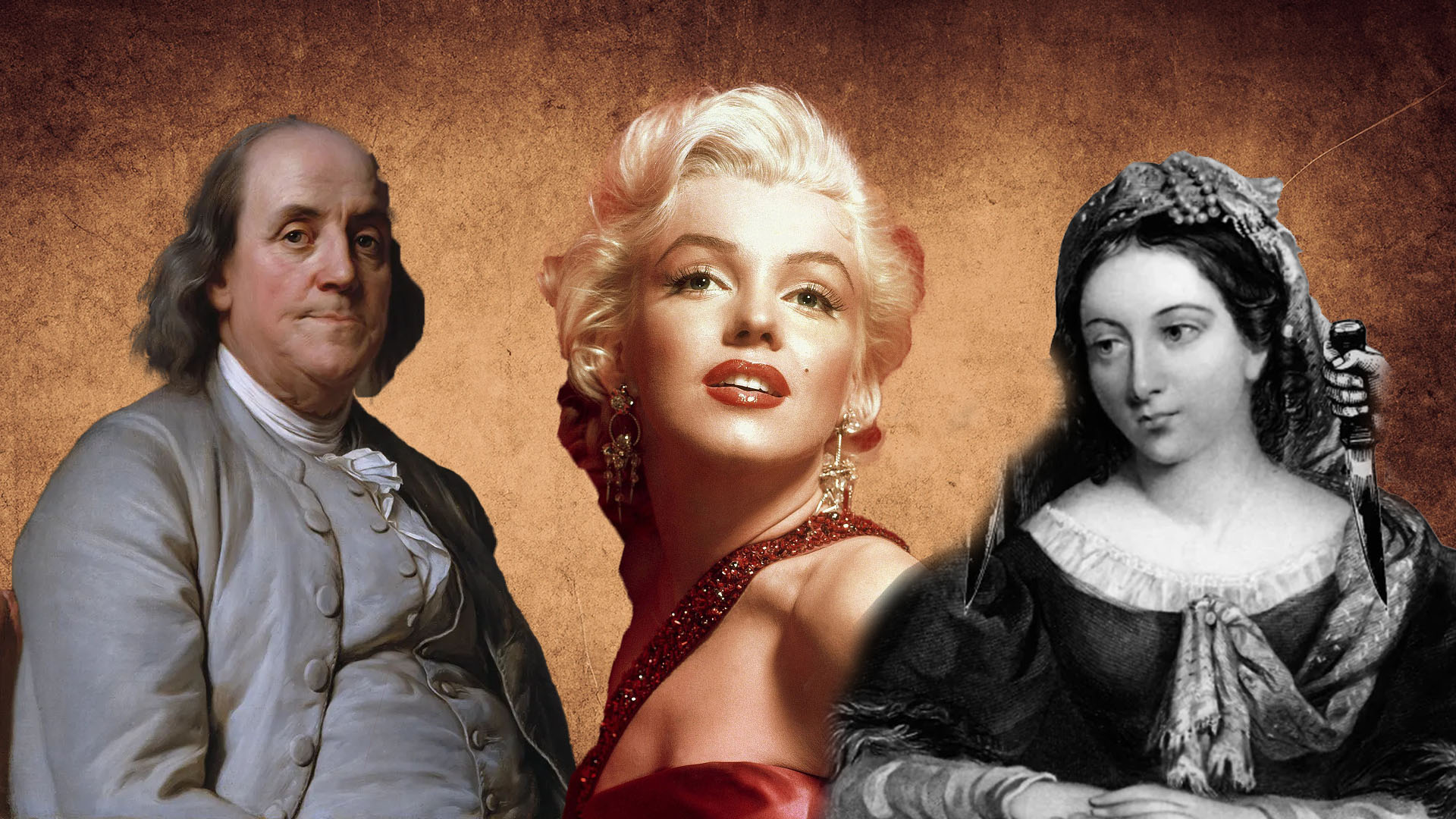
The popularity of the movie National Treasure taught millions of Ben Franklin’s pseudonym, Silence Dogood. He used it to publish anonymous letters to his brother’s newspaper, the New-England Courant. What is less well known is that it was quite common for writers to publish under false names at the time. It was a common belief that it was better to separate yourself as an individual from the ideas you present to the public. It was a way to avoid critics criticizing your work just because they hold a personal grudge against you. Perhaps we should we should return to this being the norm. I can’t say I hate the idea.
What is less well known however, is that Franklin had not just one pseudonym, but many of them. See if you can spot a theme. Ben Franklin wrote under names including, Polly Baker, Anthony Afterwit, Alice Addertongue, Poor Richard, Martha Careful, Busybody, and Benevolus. Afterwit, Addertongue and Careful were female characters Franklin wrote as to publish humorous stories, spread gossip, and criticize his former employer.
Next on the list is Norma Jeane Dougherty, one of the most famous actresses of the 1950s. Unfamiliar? You might know her better by her stage name, Marilyn Monroe? A studio executive thought her birth name was hard to pronounce and had it changed to Marilyn inspired by former Broadway star Marilyn Miller. At the same time Dougherty changed her last name to her mother’s maiden name Monroe. After little more than a decade as a movie star she passed away at the age of 37. Despite her short time in the starlight Monroe has become one of the most well remembered actresses of all time.
Mary Fortune went by pseudonyms throughout her life, so much so, when she died most of her work was almost lost because it wasn’t known who wrote it. Born in Ireland, she moved to Quebec early after the outbreak of the Irish Potato Famine. To escape an abusive marriage, she took her son on a train to Maine, and the two of them took a boat to England and then Australia. Before Fortune made it to the southern continent, her father set up a shop there, becoming highly profitable during the Australian gold rush. While there, Mary wrote for multiple newspapers including the Australian Journal. Today, she’s remembered as the first woman to write mystery novels from the detective’s point of view.
For the Australian Journal she began with the name Waif Wander, publishing poems and short stories. In 1911 she passed away shortly after leaving an asylum. Because of the variety of names she went by in her life her work was mostly forgotten until it was rediscovered decades later. Fast forward to the 21st century and Fortune is finally beginning to receive the recognition she deserves.
The last item I’ll include here, is yours truly, myself, your webmaster. As someone who doesn’t like their real name, finding it far too common and entirely too meaningless, I’ve tried many names over the years to distinguish myself. The ones I can remember include, Gregory A. Brightwell, The Arcane Alchemist, Sally Seawater, Devan Lochees, Calamity Sam, The Salty Selkie, and most recently, both Captain Seawater and The Stone Road Pirate. The Last two I think I’m sticking with.
Miss Fortune and I share the same problem. We change our names so frequently, that’s it’s hard for anyone to keep track, even ourselves. I hope to stay as the Stone Road Pirate for a while though. It took me five years to figure out how much the symbol of the Great Stone Road means to me. If you want to know more, click here.
Citations
- Isaacson, W. (2006) Benjamin Franklin: An american life. New York etc.: Simon and Schuster.
- Brown, M. and Sussex, L. (2025) Outrageous fortunes: The adventures of Mary Fortune, crime-writer, and her criminal son. Collingwood, VIC: La Trobe University Press in conjunction with Black Inc.