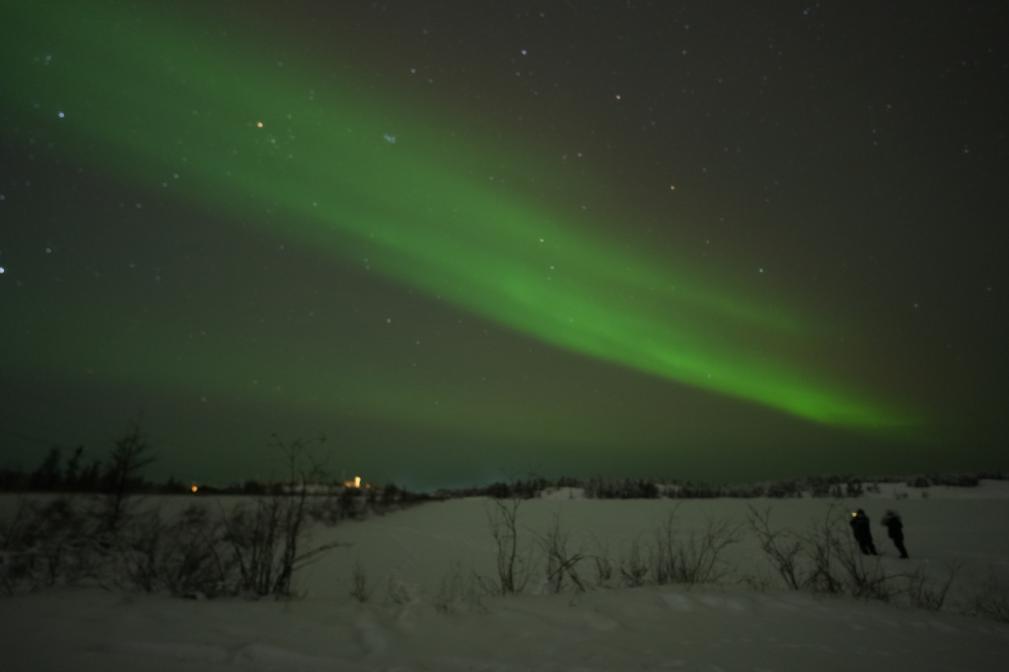
For six months of the year the temperature rarely rises above zero. On many days the temperature plunges to -40 where Celsius and Fahrenheit meet. With 20,000 residents, Yellowknife is the largest town as well as the capital of the Northwestern Territories (NWT). Spanning an area twice the size of Texas, 44,000 citizens call this land home.
The Ice King's Castle
To the north of the city travelers will find Great Bear Lake, the eighth largest in the world. Once frozen this becomes a popular spot for ice fishing, dog sledding and parking your car. The city itself is situated directly on Great Slave Lake, the tenth largest in the world. Every March the Ice King of Yellowknife builds his ice castle on it's frozen waters. Visitors from near and far are welcome to the plethora of celebrations held within the castle walls. As summer approaches locals watch the castle slowly disappear below the warming waters.
The Arctic Duchess - Cold Plunge Sauna
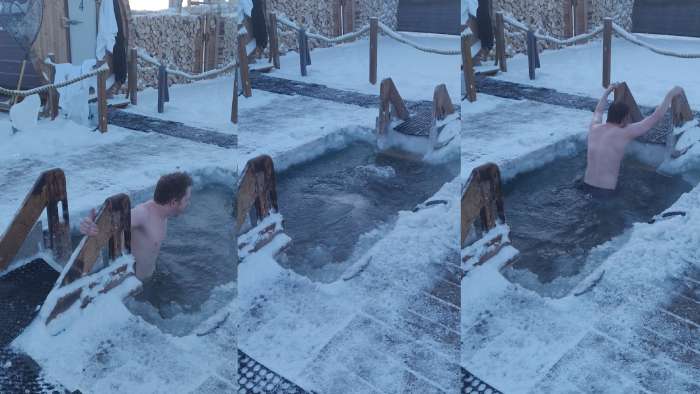
A few hundred feet from the castle visitors will find the Arctic Duchess, a retired tugboat. During the winter guests can enjoy a one kind experience known as a cold plunge sauna. Several round wooden saunas are set up outside, each one heated by the oldest rocks on earth; Acasta Gneiss. After 20 minutes in the sauna, those brave enough can step outside and hop in the ice bath chilled to three degrees Celsius. It is ill advised to spend more than ten to fifteen seconds under the surface. Wooden ladders adorn both sides, but they are frozen and slippery. Once out it’s time to quickly run back into the sauna and slam the door or go to the warming tent for a few minutes with tables full of sweet confectionaries. Rinse and repeat for the next two hours and you should find yourself awake and refreshed.
The Northern Lights
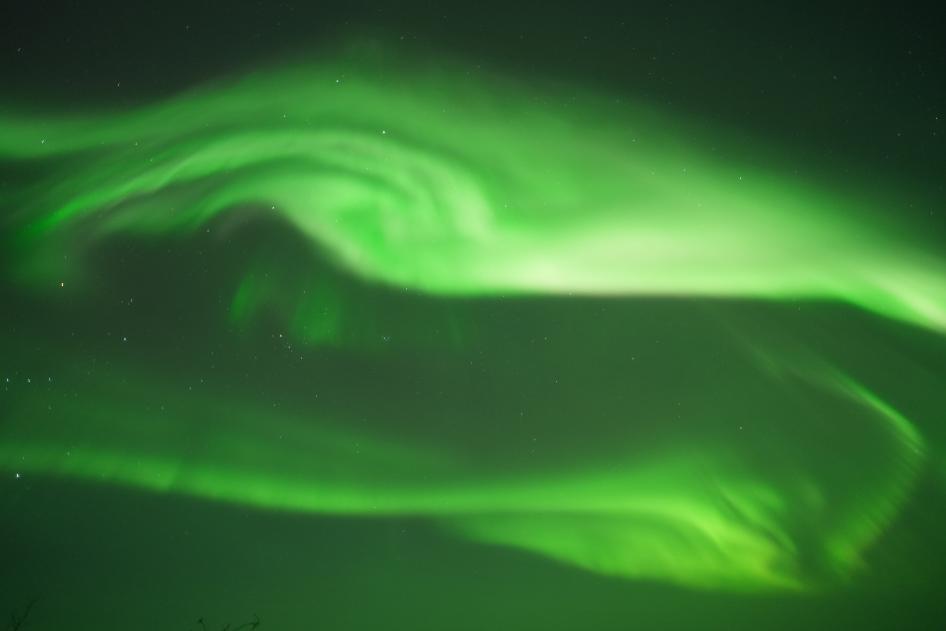
The northern lights are a phenomenon of weather, they vary the same way the rain does. Imagine a spectrum from a light drizzle to a heavy downpour. A light drizzle of the northern lights usually looks better on camera than it does in person. They are often pale, mostly whitish gray, with small hints of color around the edges. The lights in this stage look almost milky, like a translucent film strewn out in lines. Most digital cameras will show these lights as being an intense shade of green. The most awe-inspiring part of these lights is the movement. Watching the lines of light flutter like a butterfly’s wings weaving in and out rapidly is incredible. It looks just like it does in the movies.
A heavy downpour looks so amazing in person it’s impossible to replicate on a screen. Bright intense colors shifting constantly. Rapid wide movements carving across the sky. This happens, but it is rare. It is unlikely for most visitors to see a display as impressive as this on their visit. To get a good chance of seeing the lights like this it is recommended to stay for seven or eight days.
To get the most likely chance of seeing them it’s recommended to go with a tour group. 20 minutes outside of town most cell service drops off. If you rent a car, most companies will only let you go 50 kilometers outside of town. On the first night our tour bus drove over 100 kilometers before finding a spot where we could see the lights. One of the more popular tours is run by the Northern Lights Tour Company. They are a chasing tour, meaning they drive all over the area to get the best shot chances. The first night we were picked up at our hotel at 9:00pm and stopped at six or seven locations before returning to our hotel at 2:00am.
Why Does Yellowknife Exist?
Diamonds, Government and Tourism make up nearly 90% of jobs. Diamonds were discovered in 1991 and are now a billion-dollar industry for the Canadian economy. When the diamond boom began, accommodations for miners and their families came with and paved the way for the tourism industry. At latitudes this far north, settlements like Yellowknife can sometimes see the northern lights over 300 days a year and today tens of thousands of visitors from Australia to Japan and everywhere in between come to Yellowknife in hopes of seeing them. Finally, as the only city in the entire territory to have more than 10,000 residents, almost by default Yellowknife has become the primary home of government affairs.